
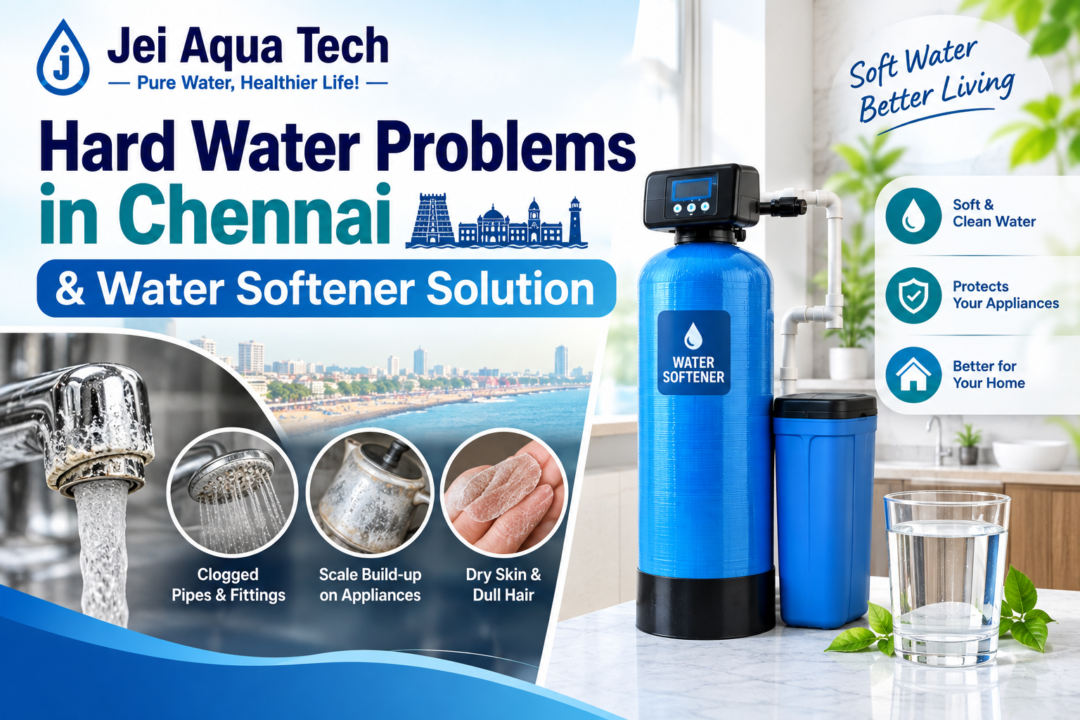
Hard water is a common water quality problem faced by many homes, apartments, offices, hotels, and commercial buildings in Chennai. Water containing high levels of hardness-causing minerals such as calcium and magnesium can create several problems in bathrooms, kitchens, plumbing systems, washing machines, water heaters, and other appliances.
If you notice white deposits on taps, reduced soap lather, dry skin, scale buildup, or frequent plumbing issues, your water may have high hardness. A suitable Water Softener Filter can help reduce these hardness-related problems and improve the overall quality of water.
What Is Hard Water?
Hard water contains a high concentration of dissolved minerals, mainly calcium and magnesium. These minerals are naturally present in groundwater and borewell water. When hard water is regularly used for bathing, cleaning, washing, or other household activities, mineral deposits can gradually build up on surfaces and inside plumbing systems.
The hardness level can vary depending on the water source and location. Borewell water may contain higher levels of dissolved minerals, making water testing important before selecting a suitable treatment system.
Common Signs of Hard Water
Identifying hard water early can help prevent long-term problems. Some common signs include:
- White scale deposits on taps and bathroom fittings
- Soap and shampoo not producing enough lather
- Dry or rough feeling after bathing
- Scale buildup inside pipes
- Reduced efficiency of water heaters
- White spots on glassware and tiles
- Frequent cleaning of bathroom fixtures
- Increased soap and detergent consumption
If you are experiencing several of these problems, testing your water hardness can help determine the right treatment solution.
How Does Hard Water Affect Your Home?
Hard water can affect different parts of your home over time. Mineral deposits may accumulate inside pipes and plumbing fixtures, potentially reducing water flow. Scale can also develop inside geysers, water heaters, washing machines, and other appliances that regularly use water.
Bathroom fittings can develop white deposits and stains, making them difficult to clean. Hard water can also affect the performance of soaps and detergents because minerals interfere with proper lather formation.
For homes using borewell water, checking water quality and hardness is particularly useful before installing a water treatment system.
What Is a Water Softener Filter?
A Water Softener Filter is a water treatment system designed to reduce hardness-causing minerals from water. Most conventional water softeners use resin media that exchanges hardness ions such as calcium and magnesium with sodium ions.
The treated water has reduced hardness, which can help minimize scale formation and improve the performance of plumbing fixtures and appliances.
The size and type of water softener required depend on water hardness, daily consumption, flow rate, and the number of users.
How Does a Water Softener Help With Hard Water?
A properly selected water softener can provide several benefits for homes and commercial properties.
It helps reduce scale formation in plumbing systems and appliances. Softer water can also improve soap and detergent performance, meaning less product may be required for certain cleaning applications.
Using softened water for bathing can provide a more comfortable experience for people who dislike the dry or rough feeling associated with hard water. It can also make bathroom cleaning easier by reducing mineral deposits on taps, shower fittings, and tiles.
Water Softener for Borewell Water
Many properties in Chennai depend on borewell water for daily requirements. Depending on the location, borewell water may contain varying levels of hardness along with other dissolved minerals.
A water test should be conducted before choosing a softener. The test results can help determine whether hardness treatment is required and what capacity of Water Softener Filter would be appropriate.
For properties with multiple water quality issues, a combination of treatment systems may be recommended. For example, hardness treatment and iron removal may require separate filtration stages depending on the water test results.
Water Softener for Bathroom Water
Hard water can create visible scale on bathroom taps, showerheads, tiles, and other fittings. A suitable water softening system can help reduce hardness and minimize these deposits.
For homes where bathroom water is the main concern, the softener capacity should be selected according to the number of users and daily water consumption. Proper sizing is important because an undersized system may not provide adequate treatment.
How to Choose the Right Water Softener Filter?
Selecting the right water softener should not be based only on the price or size of the unit. Several factors need to be considered.
1. Test Water Hardness
A water quality test helps determine the hardness level and identify other contaminants.
2. Calculate Daily Water Consumption
The number of people using the water and their daily consumption should be considered when selecting system capacity.
3. Check Flow Rate
The softener should be capable of handling the required water flow without affecting normal usage.
4. Consider Regeneration Requirements
Salt-based softeners require periodic regeneration. The regeneration frequency depends on water hardness, resin capacity, and water consumption.
5. Choose Professional Installation
Correct installation helps ensure proper water flow, regeneration, drainage, and overall system performance.
Does a Water Softener Remove Iron?
A water softener is primarily designed to treat hardness caused by calcium and magnesium. It should not automatically be considered a complete solution for high iron levels.
If your water has both hardness and high iron content, a water test can help determine whether an Iron Removal Filter or another pre-treatment system is required along with the water softener.
This is why testing the source water before installation is an important step.
Water Softener Filter Maintenance
Regular maintenance helps maintain the performance of the softener. Depending on the system, maintenance may include checking the resin, inspecting the control valve, cleaning the brine tank, checking regeneration cycles, and ensuring proper salt levels.
The service frequency depends on water quality and usage. Many systems benefit from professional inspection every 6 to 12 months.
Why Choose Professional Water Softener Service in Chennai?
Professional installation and maintenance can help ensure that the system is correctly sized, installed, and operated. Technicians can inspect water flow, valves, resin media, regeneration settings, and other components.
At Jei Aqua Tech, we provide water treatment solutions for residential, commercial, and industrial requirements in Chennai. Our services include water softener installation, maintenance, repair, resin replacement, and system inspection.
Final Thoughts
Hard water can gradually affect plumbing, bathroom fittings, appliances, cleaning performance, and overall water usage. Identifying the problem through proper water testing is the first step toward selecting an effective treatment solution.
A properly sized Water Softener Filter can help reduce hardness and scale-related problems and provide better water quality for everyday use.
If you are experiencing hard water problems in Chennai, contact Jei Aqua Tech for professional water testing and water softener solutions based on your water quality and daily requirements.

Written by Seoadmin

-
Sale Product on sale
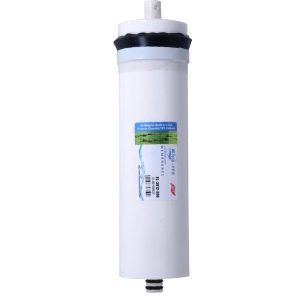
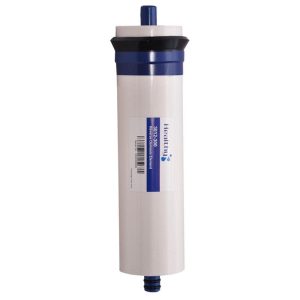
 300 GPD Hi-Tech RO Membrane
₹ 3,500Original price was: ₹ 3,500.₹ 2,700Current price is: ₹ 2,700. -
Sale Product on saleVontron 300 Gpd RO Membrane
₹ 3,500Original price was: ₹ 3,500.₹ 3,000Current price is: ₹ 3,000. -
Sale Product on sale300 Gpd Healthy RO Membrane
₹ 4,200Original price was: ₹ 4,200.₹ 3,700Current price is: ₹ 3,700. -
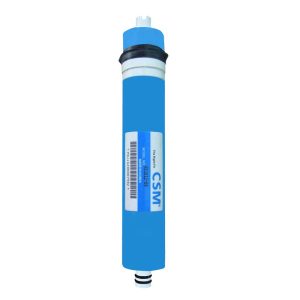
Sale Product on saleCsm 80 GPD Membrane
₹ 2,500Original price was: ₹ 2,500.₹ 1,600Current price is: ₹ 1,600.

-
Sale Product on sale50 LPH RO+Hot+Cold Water Dispenser
₹ 82,000Original price was: ₹ 82,000.₹ 75,000Current price is: ₹ 75,000. -
Sale Product on sale25 LPH RO+Hot+Cold Water Dispenser
₹ 66,000Original price was: ₹ 66,000.₹ 64,900Current price is: ₹ 64,900. -
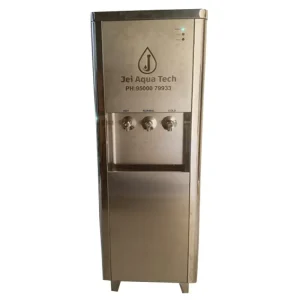
Sale Product on saleNormal+Hot+Cold Water Dispenser
₹ 58,500Original price was: ₹ 58,500.₹ 57,800Current price is: ₹ 57,800.

Leave a Reply
You must be logged in to post a comment.