
Clean and safe water is essential for drinking, cooking, bathing, and many industrial applications. However, water supplied from municipal sources, borewells, tanks, and other sources can contain chlorine, unpleasant odors, organic compounds, pesticides, and other contaminants. An activated carbon filter for water treatment is one of the most widely used filtration methods for improving water quality and taste.
Jei Aqua Tech provides water treatment solutions including activated carbon filters for homes, offices, commercial applications, and industrial water treatment systems. In this guide, let us understand how an activated carbon filter works, what contaminants it can reduce, its benefits, applications, and maintenance requirements.
What Is an Activated Carbon Filter?
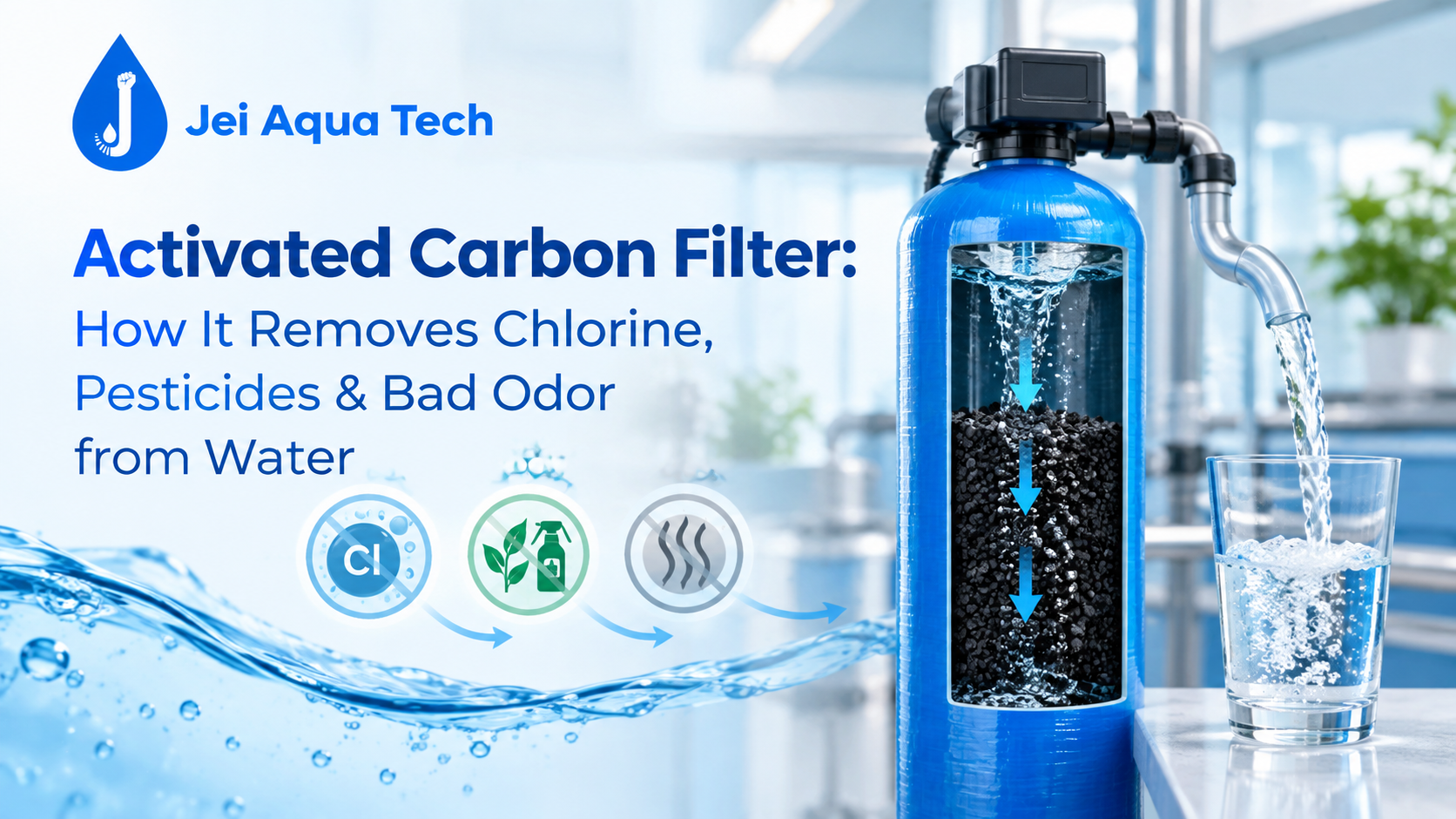
An activated carbon filter is a water filtration system that uses specially processed carbon as its filtration media. The carbon contains millions of tiny pores that create a large surface area.
When water passes through the carbon media, many unwanted substances are attracted to and held on the carbon surface. This process is called adsorption.
Activated carbon is commonly produced from materials such as coconut shells, wood, or coal. The material is processed to create a highly porous structure suitable for water purification.
The effectiveness of a carbon filter depends on factors such as carbon quality, contact time, water flow rate, contaminant concentration, and the type of carbon used.
How Does an Activated Carbon Filter Work?
The working principle of an activated carbon filter is primarily adsorption rather than simply trapping particles.
As water enters the filter vessel, it flows through the activated carbon media. The porous carbon surface attracts certain dissolved organic compounds and other substances.
During this process, activated carbon can help reduce:
- Chlorine
- Bad taste
- Unpleasant odor
- Some pesticides
- Organic compounds
- Certain volatile organic compounds (VOCs)
- Some chemicals that affect water taste and smell
The exact removal performance varies depending on the carbon type and water quality.
For example, when chlorinated water passes through an activated carbon filter, the carbon can reduce chlorine, resulting in water with a better taste and odor.
How Does a Carbon Filter Remove Chlorine?
Chlorine is commonly used to disinfect drinking water and control microorganisms in water distribution systems. Although chlorine is useful for disinfection, excessive residual chlorine can produce a noticeable taste and smell.
Activated carbon is highly effective at reducing chlorine under suitable operating conditions.
When chlorinated water comes into contact with the carbon surface, reactions and adsorption processes reduce the chlorine residual. As a result, the filtered water can have a more pleasant taste and odor.
This makes activated carbon filtration particularly useful as a RO plant pre-treatment stage or as part of drinking-water purification systems.
Can Activated Carbon Remove Pesticides?
Certain activated carbon filters can reduce a range of pesticides and organic contaminants because activated carbon has a strong affinity for many organic molecules.
However, not every pesticide is removed equally. Removal depends on the chemical properties of the pesticide, carbon type, concentration, water chemistry, and contact time.
For this reason, activated carbon should not automatically be considered a complete solution for every pesticide or chemical contaminant. Water testing is recommended when specific contaminants are suspected.
How Does Carbon Filter Remove Bad Odor?
Bad odors in water can originate from chlorine, organic compounds, hydrogen sulfide, and other substances.
Activated carbon can reduce many odor-causing organic compounds and chlorine, helping improve the smell of water.
For example, water with a noticeable chlorine smell may become significantly more acceptable after passing through a properly designed carbon filtration system.
If the odor is caused by a contaminant that activated carbon does not effectively remove, however, additional treatment may be necessary.
Activated Carbon Filter for RO Plant Pre-Treatment
Activated carbon filters are commonly installed before RO systems as part of the pre-treatment process.
A typical treatment arrangement may include:
Raw Water → Sand Filter → Activated Carbon Filter → Micron Filter → RO System
The exact configuration depends on the raw-water quality and RO plant design.
The carbon filter can help reduce chlorine and organic contaminants before water enters sensitive RO membranes. This is particularly important because certain RO membranes, especially polyamide membranes, can be damaged by chlorine exposure.
Therefore, proper pre-treatment can contribute to better RO membrane performance and longer membrane life.
Main Benefits of Activated Carbon Filtration
1. Reduces Chlorine
Activated carbon is widely used for reducing chlorine and improving the taste and smell of treated water.
2. Improves Taste
By reducing chlorine and certain organic compounds, carbon filtration can make water taste better.
3. Controls Bad Odor
Activated carbon can reduce many odor-causing substances present in water.
4. Helps Reduce Organic Contaminants
Depending on the carbon and system design, activated carbon can reduce various organic compounds and VOCs.
5. Protects RO Systems
When used as RO pre-treatment, carbon filtration can help protect RO membranes from chlorine exposure.
6. Suitable for Different Applications
Activated carbon filters can be designed for residential, commercial, and industrial water treatment systems.
Where Are Activated Carbon Filters Used?
Activated carbon filtration has a wide range of applications.
Home Water Purification
Carbon filters are commonly used in household water purification systems to improve taste and reduce chlorine.
RO Water Treatment
Carbon filtration can be installed before an RO membrane as a pre-treatment step.
Commercial Buildings
Hotels, restaurants, offices, schools, and apartments may use carbon filtration to improve water quality.
Industrial Water Treatment
Industrial systems may use activated carbon as part of a larger treatment process for controlling specific organic contaminants.
Borewell Water Treatment
For borewell water, activated carbon may be combined with other treatment methods depending on the water test results. If the water contains iron, hardness, or other contaminants, separate treatment stages may be required.
Activated Carbon Filter Maintenance
Regular maintenance is important for maintaining filtration performance.
Over time, the carbon media becomes exhausted as adsorption sites are occupied. A filter that is not maintained may gradually lose its ability to reduce chlorine, odor, and organic contaminants.
Maintenance may include:
- Checking inlet and outlet water quality
- Inspecting valves and pipelines
- Checking pressure and flow
- Backwashing where applicable
- Checking the condition of the carbon media
- Replacing exhausted activated carbon
- Cleaning the filter vessel
- Checking the complete filtration system
The replacement interval depends on water quality, daily water consumption, carbon quantity, and system design. Therefore, there is no single replacement period that applies to every installation.
Activated Carbon Filter vs. Other Filters
It is important to understand that different filters perform different functions.
A sand filter is mainly used for reducing suspended solids and turbidity.
An activated carbon filter is mainly used for reducing chlorine, taste, odor, and certain organic contaminants.
An RO system is designed for removing dissolved salts and many other dissolved contaminants.
Therefore, water treatment systems often combine several technologies rather than depending on one filter for every contaminant.
Why Choose Jei Aqua Tech for Activated Carbon Filter Solutions?
Jei Aqua Tech provides water treatment solutions for residential, commercial, and industrial requirements. The right activated carbon filter should be selected according to the raw-water quality, flow rate, application, and treatment objective.
Before installing a carbon filtration system, water testing can help determine whether activated carbon is suitable and whether additional treatment stages are required.
Whether you need an activated carbon filter for water treatment, RO pre-treatment, commercial filtration, or an existing carbon filter service, choosing the correct system design and maintaining the media properly can make a significant difference in water quality.
Conclusion
An activated carbon filter is an important component of modern water treatment. Through adsorption and related reactions, activated carbon can effectively reduce chlorine and help control bad taste, unpleasant odors, and many organic contaminants.
For RO plants and other purification systems, carbon filtration can also serve as an important pre-treatment stage. However, activated carbon does not remove every type of contaminant, so the treatment system should always be selected based on actual water quality.
Looking for an activated carbon filter for water treatment? Jei Aqua Tech can help you select and maintain the right carbon filtration solution for your water-treatment requirement.

Written by Seoadmin

-
Sale Product on sale
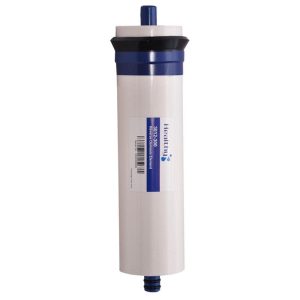
 300 GPD Hi-Tech RO Membrane
₹ 3,500Original price was: ₹ 3,500.₹ 2,700Current price is: ₹ 2,700. -
Sale Product on saleVontron 300 Gpd RO Membrane
₹ 3,500Original price was: ₹ 3,500.₹ 3,000Current price is: ₹ 3,000. -
Sale Product on sale300 Gpd Healthy RO Membrane
₹ 4,200Original price was: ₹ 4,200.₹ 3,700Current price is: ₹ 3,700. -
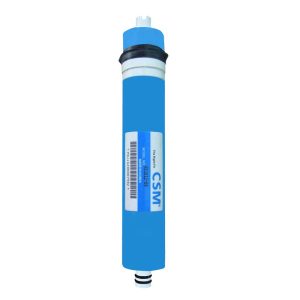
Sale Product on saleCsm 80 GPD Membrane
₹ 2,500Original price was: ₹ 2,500.₹ 1,600Current price is: ₹ 1,600.

-
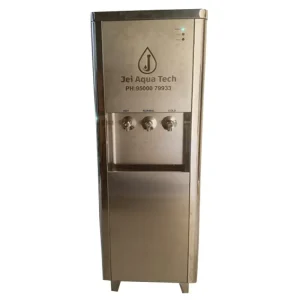
Sale Product on sale50 LPH RO+Hot+Cold Water Dispenser
₹ 82,000Original price was: ₹ 82,000.₹ 75,000Current price is: ₹ 75,000. -
Sale Product on sale25 LPH RO+Hot+Cold Water Dispenser
₹ 66,000Original price was: ₹ 66,000.₹ 64,900Current price is: ₹ 64,900. -
Sale Product on saleNormal+Hot+Cold Water Dispenser
₹ 58,500Original price was: ₹ 58,500.₹ 57,800Current price is: ₹ 57,800.

Leave a Reply
You must be logged in to post a comment.