
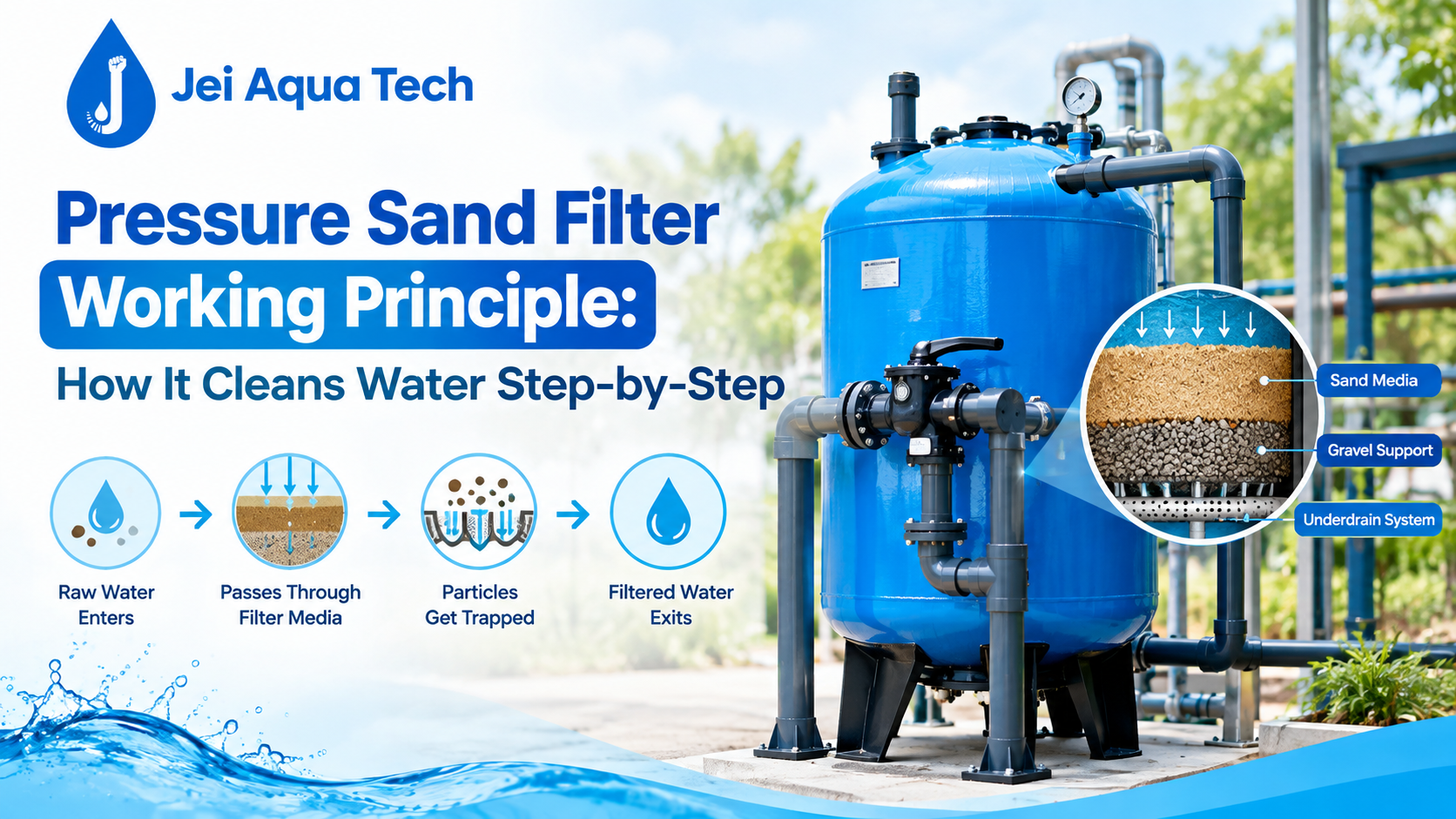
Clean and properly treated water is important for homes, commercial facilities, industries, hotels, hospitals, and other applications. Depending on the source, raw water may contain suspended particles, sand, mud, silt, and other visible impurities. A pressure sand filter is one of the commonly used filtration systems for reducing these suspended impurities before further water treatment.
A pressure sand filter works by passing water through a specially selected bed of filter media under pressure. As water moves through the media, suspended particles are trapped within the filter bed, producing clearer water at the outlet.
In this guide, Jei Aqua Tech explains the pressure sand filter working principle, its major components, filtration process, backwashing method, applications, maintenance requirements, and the factors to consider when selecting a system.
What Is a Pressure Sand Filter?
A pressure sand filter is a closed filtration vessel designed to remove suspended solids and particulate matter from water.
Unlike an open gravity sand filter, the filtration process takes place inside a pressurized vessel. Raw water is pumped into the filter, passes downward or through the filter media, and exits after suspended particles have been captured.
The filter generally contains different grades of media arranged inside a pressure vessel. Depending on the application, the media may include specially graded sand, supporting gravel, or other filtration materials.
A pressure sand filter is often installed as a pre-treatment stage before systems such as:
- Reverse osmosis plants
- Water softeners
- Activated carbon filters
- UV treatment systems
- Commercial water purification systems
- Industrial water treatment plants
Pressure Sand Filter Working Principle
The basic working principle is simple: water passes through a granular filter bed, while suspended particles are retained within the media.
The process can be understood in several stages.
1. Raw Water Enters the Filter
Raw water containing suspended impurities is pumped into the pressure sand filter vessel.
Depending on the system design, the inlet arrangement distributes water across the filter bed to prevent excessive flow through a single section of the media.
Proper water distribution is important because uneven flow can reduce filtration efficiency.
2. Water Passes Through the Filter Media
After entering the vessel, water moves through the filter media.
The filter bed contains small spaces between individual media particles. Suspended solids are retained when water travels through these spaces.
Larger particles may be trapped near the upper portion of the bed, while smaller particles can become retained deeper within the media.
This process is commonly known as depth filtration.
3. Suspended Particles Are Trapped
The main purpose of the pressure sand filter is to reduce suspended impurities.
Depending on the raw-water quality and system design, the filter can help reduce materials such as:
- Sand
- Mud
- Silt
- Suspended solids
- Rust particles
- Dirt
- Other particulate matter
The exact filtration performance depends on factors such as media size, flow rate, raw-water characteristics, vessel design, and maintenance.
4. Filtered Water Reaches the Collector
After passing through the media bed, the treated water reaches the collection system at the bottom of the vessel.
A properly designed underdrain or distribution system collects the filtered water while preventing the filter media from escaping through the outlet.
The filtered water then moves to the next treatment stage or storage tank.
Pressure Sand Filter Process
The complete pressure sand filter process can be summarized as:
Raw Water → Pressure Vessel → Distribution System → Sand/Filter Media → Particle Removal → Underdrain → Filtered Water
This makes the pressure sand filter an important pre-filtration system for many water treatment applications.
Main Components of a Pressure Sand Filter
A typical pressure sand filter system consists of several important components.
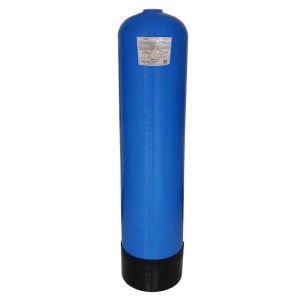
Pressure Vessel
The vessel holds the filter media and withstands the operating pressure of the system.
Vessels may be manufactured using materials such as FRP or fabricated metal, depending on the application and capacity.
Filter Media
The filter media performs the actual filtration. Proper media selection is important because different water conditions require different filtration characteristics.
Gravel Support Layer
In many systems, supporting gravel is used below the main filter media.
It helps support the media and assists with water distribution during filtration and backwashing.
Underdrain System
The underdrain collects filtered water and helps distribute backwash water throughout the filter bed.
Multiport or Automatic Valve
A valve controls the operating modes of the filter.
Common modes include:
- Filter
- Backwash
- Rinse
- Service
- Drain, depending on system configuration
Pressure Gauges
Pressure gauges can be installed to monitor the pressure before and after filtration.
An increasing pressure difference can indicate that the media is accumulating suspended particles and requires cleaning.
What Is Backwashing in a Pressure Sand Filter?
As the filter operates, suspended particles gradually accumulate inside the media bed.
If the filter is not cleaned, the pressure drop can increase and water flow may decrease.
Backwashing is the process used to clean the filter media.
During backwash, water flows through the filter in the opposite direction to normal filtration. This disturbs and expands the media bed, helping loosen trapped particles.
The dirty backwash water is then directed to the drain.
A typical cleaning cycle may include:
Backwash → Rinse → Return to Service
The exact duration and frequency depend on the filter design and raw-water quality.
How Often Should a Pressure Sand Filter Be Backwashed?
There is no single backwash schedule suitable for every installation.
The frequency depends on:
- Raw-water turbidity
- Suspended-solid concentration
- Flow rate
- Filter size
- Media condition
- Operating hours
- Pressure differential
- Water quality requirements
Some systems are operated based on a pressure-difference trigger rather than a fixed calendar schedule.
Regular monitoring is therefore more reliable than simply following an arbitrary backwash interval.
Pressure Sand Filter vs Normal Sand Filter
Although both systems use granular media for filtration, their operating arrangements are different.
A traditional gravity sand filter generally relies on gravity to move water through the media.
A pressure sand filter operates inside a closed vessel and uses pumping pressure to move water through the filter bed.
This makes pressure filtration convenient for compact treatment systems and installations where water is already being pumped through a treatment line.
Where Are Pressure Sand Filters Used?
Pressure sand filters are widely used as pre-treatment equipment in different water treatment applications.
Borewell Water Treatment
Borewell water may contain suspended particles, sand, and other impurities. A properly designed pressure sand filter can help reduce these particulate contaminants before subsequent treatment.
RO Plant Pre-Treatment
In commercial and industrial RO systems, pre-treatment is important for protecting downstream equipment.
A pressure sand filter can be installed before an RO plant to reduce suspended solids and particulate loading.
This can help reduce the amount of suspended material reaching downstream filters and membranes.
Commercial Buildings
Hotels, apartments, offices, schools, and other commercial buildings may use pressure filtration as part of their water-treatment arrangement.
Industrial Water Treatment
Industries often require water pre-treatment before processes such as softening, activated carbon filtration, demineralization, or RO treatment.
The pressure sand filter can serve as one stage within a larger treatment system.
Swimming Pool Filtration
Depending on the pool design and filtration system, sand-based pressure filtration can be used to remove suspended particles from circulating pool water.
Benefits of a Pressure Sand Filter
A correctly designed pressure sand filter offers several practical benefits.
Effective Suspended-Solid Reduction
The filter media can capture suspended particles and improve the clarity of water.
Simple Operating Principle
The system has a relatively straightforward filtration and backwash process.
Suitable for Pre-Treatment
It can be used before RO plants, softeners, carbon filters, and other treatment equipment.
Different Capacities Available
Pressure filtration systems can be designed for different flow requirements, from smaller installations to larger commercial and industrial applications.
Reusable Filter Media
Unlike disposable cartridge filters, granular media can generally be cleaned through backwashing and reused for an extended period, subject to media condition and system requirements.
Pressure Sand Filter Maintenance
Regular maintenance is important for maintaining consistent filtration performance.
Some essential maintenance activities include:
Monitor Pressure
Check the pressure readings during normal operation. A significant increase in pressure drop can indicate that the filter needs backwashing or inspection.
Perform Proper Backwashing
Follow the equipment manufacturer’s recommended backwash procedure.
Insufficient backwashing may leave accumulated particles in the media.
Inspect Filter Media
Over time, media may become damaged, compacted, fouled, or exhausted.
Periodic inspection helps determine whether media replacement or servicing is required.
Check Valves and Connections
Inspect valves, pipelines, pressure gauges, and fittings for leakage or operating problems.
Test Water Quality
Monitoring inlet and outlet water quality can help determine whether the filtration stage is performing as expected.
How to Select the Right Pressure Sand Filter
Choosing the correct pressure sand filter requires more than simply selecting a vessel size.
Important factors include:
- Flow Rate:
Determine the required filtration flow in litres per hour or litres per minute. - Raw-Water Quality:
Check turbidity, suspended solids, sand content, and other relevant parameters. - Application:
The requirements for a home, apartment, commercial building, or industrial RO plant can be very different. - Vessel Size:
The vessel should provide adequate filtration area for the required flow rate. - Filter Media:
Media type and grading should be selected according to the application. - Backwash Arrangement:
The system should have sufficient water flow for effective cleaning of the filter bed.
Does a Pressure Sand Filter Remove All Water Contaminants?
No. A pressure sand filter is primarily intended for suspended and particulate impurities.
It should not be considered a complete purification system for every type of dissolved contaminant.
For example, depending on the water problem, additional treatment may be required for:
- Dissolved iron
- Hardness
- Excess fluoride
- Salinity
- Dissolved organic compounds
- Microbiological contamination
- Total dissolved solids
The appropriate treatment should be selected based on water testing and the intended water quality.
Why Water Testing Matters Before Installation
The same filtration system may not be suitable for every water source.
Before designing a treatment system, it is useful to understand the raw-water characteristics.
A water test can help identify parameters such as turbidity, hardness, TDS, iron, pH, and other relevant contaminants.
Based on the test results, a treatment system can be designed using one or more stages such as:
Raw Water → Pressure Sand Filter → Activated Carbon Filter → Softener/Other Pre-Treatment → RO → Final Treatment
The exact configuration should be determined according to the water analysis and application.
Pressure Sand Filter for RO Plant Pre-Treatment
For an RO plant, protecting the membranes from excessive suspended solids is important.
A pressure sand filter can act as an initial filtration stage, reducing particulate loading before the water reaches finer filtration stages.
A typical arrangement may include:
Raw Water Tank → Pressure Sand Filter → Activated Carbon Filter → Micron Filtration → RO Plant
However, the exact configuration varies according to the source water and RO plant capacity.
Conclusion
A pressure sand filter is a practical filtration system designed primarily to reduce suspended particles from raw water. Its working principle involves passing pressurized water through a granular media bed, where suspended impurities are trapped before filtered water exits through the collection system.
Regular backwashing, pressure monitoring, media inspection, and appropriate system sizing are essential for reliable performance.
For borewell water, commercial applications, industrial treatment, and RO pre-treatment, the right filtration system should be selected based on the raw-water quality and required flow rate rather than using a one-size-fits-all approach.
Jei Aqua Tech provides water treatment solutions including filtration systems, RO plants, water softeners, iron-removal systems, and other water-treatment equipment. For the right pressure sand filter configuration, water testing and application requirements should be evaluated before installation.

Written by Seoadmin


-
Sale Product on sale
 300 GPD Hi-Tech RO Membrane
₹ 3,500Original price was: ₹ 3,500.₹ 2,700Current price is: ₹ 2,700. -
Sale Product on saleVontron 300 Gpd RO Membrane
₹ 3,500Original price was: ₹ 3,500.₹ 3,000Current price is: ₹ 3,000. -
Sale Product on sale300 Gpd Healthy RO Membrane
₹ 4,200Original price was: ₹ 4,200.₹ 3,700Current price is: ₹ 3,700. -
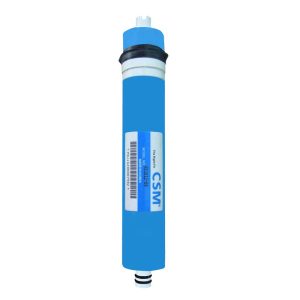
Sale Product on saleCsm 80 GPD Membrane
₹ 2,500Original price was: ₹ 2,500.₹ 1,600Current price is: ₹ 1,600.

-
Sale Product on sale50 LPH RO+Hot+Cold Water Dispenser
₹ 82,000Original price was: ₹ 82,000.₹ 75,000Current price is: ₹ 75,000. -
Sale Product on sale25 LPH RO+Hot+Cold Water Dispenser
₹ 66,000Original price was: ₹ 66,000.₹ 64,900Current price is: ₹ 64,900. -
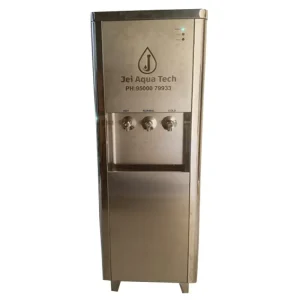
Sale Product on saleNormal+Hot+Cold Water Dispenser
₹ 58,500Original price was: ₹ 58,500.₹ 57,800Current price is: ₹ 57,800.

Leave a Reply
You must be logged in to post a comment.